This guide explains how to search for, evaluate, and apply for Indeed Pick Packer jobs while understanding daily duties, workplace expectations, pay factors, safety requirements, and career development. Pick packer roles support warehouse and e-commerce operations by locating products, checking order accuracy, packing goods, and preparing shipments. Job conditions vary by employer, shift, location, experience, equipment, and applicable labor regulations.

Searching for an “Indeed Pick Packer” position usually means using Indeed to find warehouse roles focused on order picking, product checking, packing, labeling, and dispatch preparation. The phrase may describe a specific search rather than a formal job title. Employers can use related titles such as warehouse picker, order picker, packer, fulfillment associate, warehouse operative, distribution assistant, dispatch operative, or logistics worker.
Although the work is often associated with e-commerce, pick packers are employed across many sectors. Retail distribution centers, grocery warehouses, pharmaceutical suppliers, manufacturers, third-party logistics companies, wholesalers, furniture operations, automotive parts suppliers, and spare-parts businesses all depend on accurate order fulfillment. The central objective remains consistent: ensure that the correct products reach the correct destination in suitable condition and within the required dispatch window.
From an industry perspective, applicants should assess more than the job title. The same “pick packer” label can describe substantially different working environments. One position may involve small parcels and handheld scanners, while another may require handling bulky cartons, working in chilled storage, processing returns, or operating powered warehouse equipment after formal authorization. A careful review of the complete advertisement is therefore essential.
Applicants should also recognize that a pick packer role sits within a larger supply chain. The worker’s actions affect inventory records, customer service, transportation planning, warehouse productivity, and the employer’s reputation. A correctly picked and well-packed order can move smoothly through dispatch. An incorrect item, damaged carton, or missing label may lead to rework, delays, refunds, additional transportation, and customer dissatisfaction.
A pick packer normally completes several connected activities within a warehouse workflow. The exact sequence depends on the employer’s warehouse management system, product range, order volume, facility layout, and quality procedures. In some workplaces, picking and packing are separate jobs. In others, one employee completes the entire process from retrieving the goods to placing the finished order in the dispatch area.
Some roles also include counting inventory, unloading deliveries, assembling promotional orders, sorting parcels, preparing shipping documents, or communicating exceptions to a supervisor. Candidates should not assume that every pick packer vacancy involves only light manual work. The listing may mention lifting, standing for extended periods, repetitive movements, temperature-controlled zones, or performance targets.
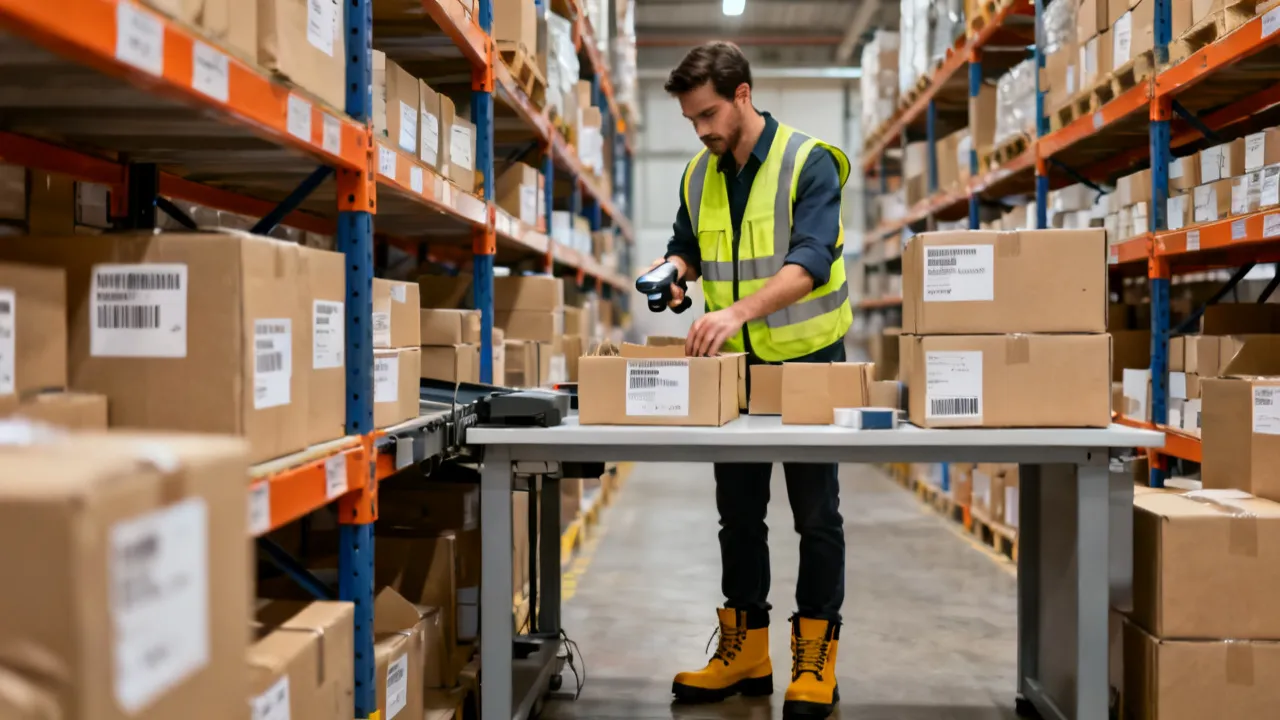
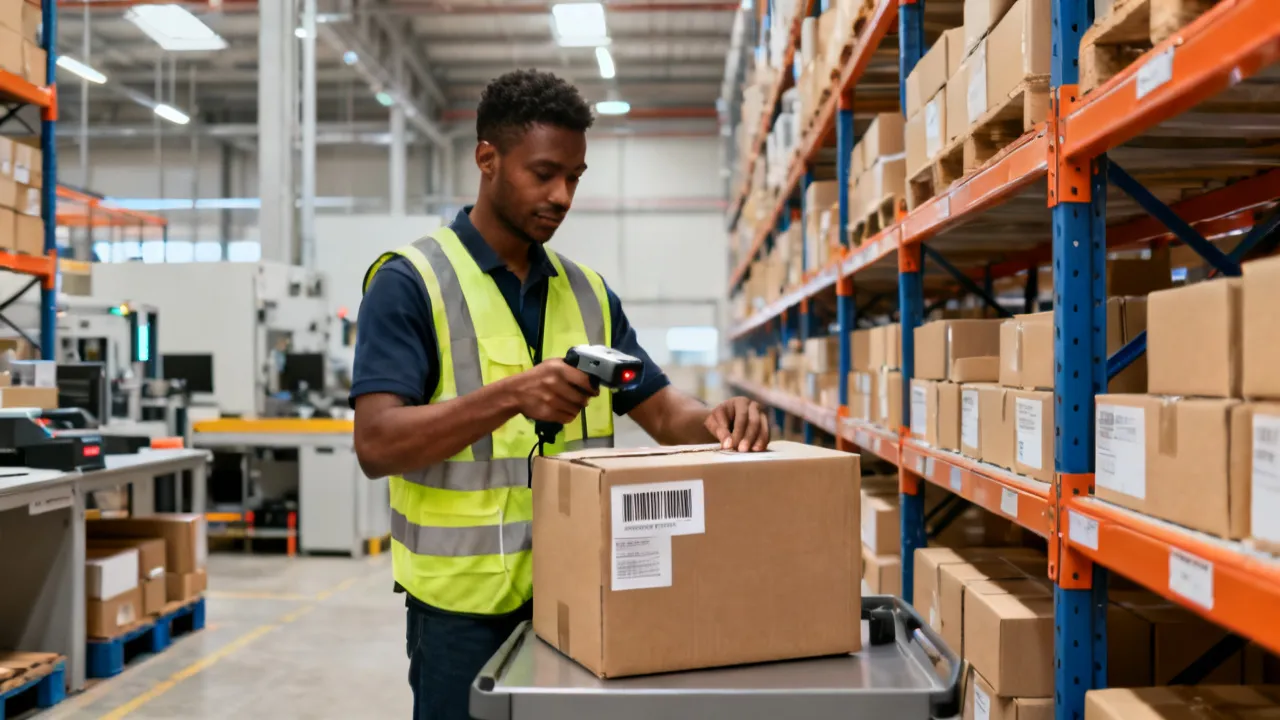
The workflow often begins when a digital order is released to the warehouse. The system may group orders into batches, direct the employee along a particular route, or assign a specific area of the facility. Once an item is located, the worker may scan the storage position and product barcode, confirm the quantity, and move the product to a tote, cart, pallet, or packing station. At the packing stage, the worker checks the contents again, selects packaging, applies the shipping label, and sends the completed parcel to dispatch.
Small differences in procedure can matter. A warehouse handling cosmetics may require lot or batch verification. A food operation may require date checking and stock rotation. A pharmaceutical supplier may require strict traceability and restricted access. An automotive parts warehouse may depend on exact part numbers because visually similar components may not be interchangeable. The general title is broad, so the advertisement and employer briefing should be treated as the definitive sources of information.
Warehousing combines physical handling with information accuracy. A product can be packed efficiently yet still create a costly service failure if the wrong item is shipped, the address label is misplaced, or the carton is not properly sealed. Pick packer positions help employers maintain the connection between inventory records, customer orders, and outbound transportation.
In modern distribution operations, even entry-level roles commonly involve digital tools. A worker may receive instructions through a radio-frequency scanner, mobile terminal, voice-directed system, pick-to-light display, or warehouse application. These tools can reduce ambiguity, but they also require concentration and basic digital confidence. An applicant does not necessarily need advanced technical qualifications; however, the ability to follow on-screen instructions and report discrepancies accurately is valuable.
Industry professionals often view reliability as important as speed. Productivity targets can matter, but rushing can increase mis-picks, damaged goods, and safety incidents. Strong candidates demonstrate a balanced approach: they work at a steady pace, follow the documented process, and seek clarification when an order or location is unclear.
Employers also use these positions to support fluctuating demand. Online sales, holiday periods, promotional campaigns, product launches, and seasonal shopping can create sudden increases in order volume. Some organizations hire temporary or seasonal pick packers to manage these peaks. Other employers use permanent staff because fulfillment is a continuous activity throughout the year.
The role can also support business continuity. When stock arrives, it must be put away accurately. When customers place orders, products must be retrieved. When goods are returned, their condition and status must be recorded. Pick packers may therefore interact with receiving teams, inventory controllers, supervisors, transport coordinators, and customer-service departments even when their main work is performed on the warehouse floor.
Indeed provides a broad job-search environment, so a focused search strategy can help applicants distinguish relevant vacancies from loosely related warehouse advertisements. Begin with the phrase “pick packer,” then test related terms. Employers do not always use the same terminology, and a narrow search may omit suitable opportunities.
Useful search terms include:
After entering a keyword, applicants can refine results by location, distance, employment type, shift pattern, experience level, and other available filters. Search settings vary by market and platform interface, so users should confirm the details shown on each listing rather than relying only on filter labels.
A practical search process is to save several versions of the query. For example, one search may use “pick packer,” another may use “warehouse picker,” and a third may combine the role with a preferred shift. Reviewing results across related terms creates a clearer picture of employer expectations and local hiring patterns.
Applicants should check the posting date and whether the advertisement is still accepting applications. Some job boards continue to display listings after an employer has begun interviewing. If a vacancy appears unusually old, the candidate can still apply, but should understand that the hiring process may already be advanced.
Location searches deserve special attention. A warehouse may be listed under a nearby town, industrial estate, postal district, or broader metropolitan area. Search using the specific city and surrounding areas if transportation allows. At the same time, calculate the real travel time for the required shift. A position that is close during the afternoon may be difficult to reach for a very early morning or overnight start.
Important information is usually distributed across the title, duties, requirements, schedule, compensation statement, and employer description. Read the complete advertisement before applying. A professional assessment should identify both the opportunity and the conditions attached to it.
| Advertisement Section | What to Examine | Why It Matters |
|---|---|---|
| Job title | Whether the role is a picker, packer, general warehouse worker, or combined position | The title indicates the likely scope, but the duties provide the more reliable detail |
| Daily duties | Picking, packing, scanning, replenishment, returns, loading, or inventory tasks | Shows how varied and physically demanding the work may be |
| Schedule | Day, evening, overnight, weekend, rotating, or seasonal shifts | Shift timing affects travel, rest, childcare, and personal commitments |
| Physical requirements | Standing, walking, lifting, bending, reaching, or working in temperature-controlled areas | Helps applicants evaluate whether the conditions are suitable |
| Equipment | Handheld scanners, pallet equipment, conveyors, printers, or forklifts | Indicates the training and authorization that may be required |
| Employment arrangement | Permanent, temporary, seasonal, agency, part-time, or full-time status | Clarifies expected duration and employment structure |
| Pay information | Hourly rate or salary, overtime terms, shift premiums, and payment frequency | Allows a more accurate comparison between vacancies |
| Application process | Online application, screening questions, interview, assessment, or documentation | Helps the applicant prepare complete and accurate information |
Pay should be assessed in context rather than viewed as a single figure. Compensation can vary according to region, legal minimums, experience, shift timing, employer type, collective agreements, overtime arrangements, and whether the position is direct or supplied through an agency. Where a listing does not clearly explain the rate or additional payments, applicants should request clarification through an appropriate recruitment channel before accepting an offer.
Pay advertisements may include a range rather than a confirmed rate. Ask what determines placement within the range and whether the amount is a base rate or includes attendance bonuses, productivity incentives, shift allowances, or other conditional payments. A higher headline figure may depend on requirements that are not available on every shift.
Examine whether the advertisement describes a standard weekly schedule or simply says that flexibility is required. “Flexible availability” can mean occasional overtime, changing start times, weekend work, or acceptance of short-notice shifts. The employer should be able to explain the expected pattern.
Many pick packer roles are accessible to applicants without extensive warehouse experience, particularly when the employer provides task-specific instruction. Nevertheless, employers typically expect a dependable approach to work and the ability to comply with operational procedures.
Warehouse work can involve sustained standing and walking, repeated bending, reaching, pushing, pulling, and handling packages. The acceptable weight of individual loads depends on the workplace, equipment, local law, and the employer’s risk assessment. Applicants should not infer a safe lifting limit from a generic advertisement. They should ask how loads are handled, what mechanical aids are available, and what training is provided.
Some facilities operate in cold rooms, chilled areas, heat-affected loading zones, or environments with dust and machinery noise. Appropriate protective clothing, rest arrangements, and hazard controls should be explained during onboarding. A candidate who has a medical concern affecting manual work or exposure to a particular environment should seek appropriate professional advice and discuss reasonable workplace processes with the employer where relevant.
Physical ability should not be interpreted as a requirement to ignore pain or work beyond safe limits. Employees should use the equipment and assistance procedures provided by the employer. If a load is unstable, awkward, too large, or located in an unsafe position, the appropriate response is to follow the workplace process rather than improvising.
Previous experience can help, but it is not always mandatory. Experience in retail stockrooms, manufacturing, delivery operations, inventory control, hospitality supply rooms, or other organized workplaces can demonstrate transferable skills. Forklift operation, powered pallet equipment, or other specialized machinery generally requires employer authorization and training consistent with applicable regulations. A candidate should never operate equipment solely because it appears straightforward.
Employers may also request a background check, right-to-work documentation, identity verification, or evidence of eligibility to work. Requirements differ by country, role, product category, and employer. Candidates should provide genuine documents through the official hiring process and be cautious about any request to pay money in order to secure an ordinary warehouse position.
Accuracy is the foundation of the role. A worker must distinguish between similar product codes, sizes, colors, or versions. Double-checking an item before placing it in a carton may take only a moment, yet it can prevent a return, customer complaint, inventory discrepancy, and additional transport.
Attention to location details is equally important. Warehouses often use structured addresses involving aisle, bay, shelf, and bin identifiers. Learning the layout gradually improves efficiency. Experienced workers do not simply move quickly; they develop reliable habits for confirming the location, item, quantity, and order status.
Packaging judgment affects product protection and material use. A suitable package should hold the goods securely without creating unnecessary movement or pressure. Fragile, liquid, sharp, temperature-sensitive, or regulated items may have specific handling instructions. The correct process should come from the employer’s documented standards rather than personal assumptions.
Communication becomes especially important when a product is missing, damaged, incorrectly located, or different from the system description. Hiding an exception can cause a later error. Reporting it promptly allows inventory or supervisory staff to investigate and choose the correct action.
Consistency is an underrated professional quality. Pick packer work may involve repeated tasks, but every order still requires care. A consistent worker follows the same verification steps during busy periods, after breaks, and near the end of a shift.
Time awareness supports dispatch performance. Orders may have carrier collection times, customer promises, or priority categories. Time awareness does not mean skipping checks. It means organizing movement, preparing materials in advance, and communicating early when a delay or stock issue may affect completion.
Adaptability is useful because warehouses regularly update product ranges, storage layouts, software, packing specifications, and workload priorities. A worker who can learn a revised process without losing accuracy is valuable to an operation that changes frequently.
Decide whether you prefer general picking and packing, inventory work, dispatch, returns, or a role involving specialist equipment. Consider whether you are seeking a short-term seasonal assignment, a longer-term position, part-time work, or a standard full-time schedule. This decision makes the search more targeted.
Use “Indeed Pick Packer” as a starting phrase, then compare related titles. Look for recurring employer requirements. If many local listings request scanner experience, inventory accuracy, or flexible shift availability, these themes can guide how you present your background.
Read the company description and examine the stated worksite. Confirm whether the position is at a distribution center, retail warehouse, manufacturing plant, or third-party logistics site. Check the commuting route, shift start time, parking or public transport options, and any site access requirements.
Place relevant abilities near the beginning of the resume. Examples include stock handling, order accuracy, barcode scanning, customer order preparation, inventory counting, safe manual handling, and experience meeting scheduled deadlines. Describe achievements honestly and avoid presenting unfamiliar equipment as a qualification.
Use consistent employment dates, accurate contact information, and clear answers to availability questions. If the form asks about shift work, lifting, transportation, or prior warehouse systems, answer precisely. Incomplete or contradictory information can delay the hiring process.
Employers may ask how you would respond to a missing item, a damaged product, a scanner error, or a rush period. A strong answer emphasizes checking the process, reporting the problem, protecting accuracy, and maintaining safe behavior. Interviewers may also ask about attendance, teamwork, and willingness to perform repetitive tasks.
Before accepting, review the employer name, worksite, start date, shift, compensation, employment status, probation terms where applicable, and required documents. Confirm who will provide training and whether any equipment certification is included. Written information is preferable to relying on informal verbal explanations.
Plan the journey, identify the required arrival time, wear suitable clothing, and bring any requested documents. Comfortable footwear may be important, although the employer may specify safety footwear or provide protective equipment. Arriving prepared allows the first day to focus on induction, learning, and asking sensible questions.
A pick packer resume does not need elaborate language. It should show that the applicant can work systematically, handle products responsibly, and follow instructions. A concise profile might state that the candidate is dependable, detail-focused, comfortable with routine physical work, and able to support accurate order fulfillment.
Relevant experience can come from several settings:
Use action-oriented but factual descriptions. “Checked incoming stock against delivery documents” is more informative than “helped in a warehouse.” “Packed customer orders according to product and shipping instructions” explains the relevance of the experience without exaggeration.
If previous work involved measurable results, include them only when the figures are accurate and meaningful. Examples might include processing a certain volume of orders, maintaining accurate stock records, supporting a dispatch deadline, or training new colleagues. Avoid claiming perfect accuracy or exceptional productivity unless the employer can verify the statement.
The resume should also make availability easy to understand. If the applicant can work evenings, weekends, rotating shifts, or seasonal periods, that information may be useful. However, availability should be truthful. Claiming unlimited flexibility and later changing it can damage trust during the hiring process.
Explain that you would pause the transaction, recheck the product code and order information, and follow the employer’s discrepancy procedure. If the issue remains, you would notify the appropriate supervisor or inventory team rather than substituting an item without authorization.
Describe a repeatable checking routine. This might include confirming the location, scanning the item, counting the quantity, and inspecting the product before packing. The answer should show that you use process discipline rather than memory alone.
State that you would separate or identify the product according to site procedure, record the issue when required, and notify the responsible person. Shipping visibly damaged goods without instruction can create additional problems.
A professional response combines prioritization, communication, and safety. Explain that you would maintain the prescribed process, ask for direction if priorities change, and avoid unsafe shortcuts. Speed is useful only when quality and safety remain controlled.
Answer honestly. If you can work particular shifts, specify them clearly. If availability is limited, transparency helps prevent a mismatch after hiring.
Choose an example that demonstrates attention to detail. Explain how you noticed the issue, what steps you took to verify it, whom you informed, and how the problem was resolved. The example does not need to come from a warehouse; an incorrect retail delivery, stock count, invoice, or customer order can also demonstrate the relevant behavior.
Explain that you would remain respectful, offer practical assistance when appropriate, and inform a supervisor if workload or safety could be affected. The answer should show teamwork without suggesting that you would ignore your own duties or bypass the established chain of responsibility.
Safety should be treated as a core performance responsibility rather than an administrative formality. The U.S. Occupational Safety and Health Administration, the UK Health and Safety Executive, and equivalent authorities in other jurisdictions publish guidance covering workplace hazards, manual handling, machinery, protective equipment, and warehouse operations. Applicable requirements depend on the country and the specific workplace.
Common safety expectations include:
Manual handling is not solved by lifting technique alone. Employers should assess the load, task, environment, frequency, and available controls. A responsible applicant can ask how the company manages heavier cartons, awkward shapes, repetitive activity, and peak workload periods.
Warehouse traffic can present risks that are not obvious to someone new to the environment. Forklifts, pallet trucks, delivery vehicles, conveyors, and compactors may operate near pedestrian work areas. New employees should learn designated routes, crossing points, blind corners, and restricted zones during induction. Mobile-phone use, headphones, and other distractions may be prohibited or limited in operational areas.
Housekeeping is also a safety task. Loose shrink wrap, broken pallets, discarded packaging, spilled liquids, and obstructed aisles can create trip or collision hazards. A pick packer should know how to remove waste, isolate a hazard, and notify the responsible person. Reporting a problem early is generally more effective than walking around it and assuming somebody else will respond.
Many warehouses rely on barcode or radio-frequency identification systems to connect physical goods with digital records. A worker may scan a location, scan a product, confirm a quantity, and complete the order through a handheld device. Other facilities use voice-directed picking, pick-to-light systems, automated conveyors, dimensioning equipment, or integrated packing stations.
Technology does not remove the need for judgment. A scanner can confirm that a barcode was read, but the worker may still need to notice visible damage, an unusual product condition, or a mismatch between the item and the packaging instruction. Digital systems also require accurate responses. Selecting the wrong quantity or confirming an action prematurely can create an inventory error.
Applicants who have used point-of-sale systems, stock-control software, delivery scanners, warehouse applications, or inventory spreadsheets can mention that experience. Those who have not used a warehouse system can emphasize their ability to learn structured procedures and use digital tools carefully.
Common technology-related problems include a barcode that will not scan, a device that loses connection, a location that is not recognized, or an item whose system description differs from the physical label. The correct response is usually to follow the site’s technical or exception procedure. Guessing, repeatedly scanning the wrong barcode, or asking another person to confirm an incomplete transaction may make the problem more difficult to trace.
Warehouses may monitor several measures, including order accuracy, completed lines, packing quality, attendance, inventory discrepancies, damage rates, and adherence to safety procedures. The precise measures and their weighting differ by employer. Applicants should avoid assuming that a high item count is the only indicator of successful work.
From an operational standpoint, productivity should be interpreted alongside quality and safety. A worker who processes orders rapidly but creates repeated errors may impose additional costs through returns, rework, customer service contacts, and inventory corrections. Conversely, a worker who is careful but does not improve familiarity with the process may need coaching on workflow efficiency. The strongest performance combines accuracy, steady pace, communication, and safe conduct.
New employees commonly need time to learn the layout, product range, system prompts, packing standards, and local terminology. A fair assessment should consider the training period and the complexity of the assigned work. Workers can improve by learning common locations, preparing packaging materials efficiently, reducing unnecessary movement, and asking experienced colleagues about approved methods.
| Work Environment | Typical Product Profile | Possible Conditions | Questions to Ask |
|---|---|---|---|
| Retail distribution | Clothing, household goods, general merchandise | Large product range and variable carton sizes | How are seasonal peaks and product locations managed? |
| Grocery fulfillment | Packaged food, beverages, household essentials | Potential temperature zones and short dispatch windows | Are chilled or frozen areas part of the normal shift? |
| Pharmaceutical logistics | Medicines, medical supplies, controlled inventory | Strict traceability, labeling, and quality procedures | What documentation and training are required? |
| Manufacturing stores | Components, tools, raw materials, spare parts | Part-number accuracy and inventory control | Does the role include production-line replenishment? |
| Third-party logistics | Products belonging to multiple clients | Different client procedures and changing workflows | How are client-specific packing standards taught? |
| Returns processing | Customer returns and exchanged products | Inspection, classification, and system updates | Is the position primarily outbound packing or returns work? |
| Industrial or automotive parts | Tools, machinery components, and replacement parts | Heavy, technical, or visually similar products | Are product specifications and lifting aids provided? |
This comparison illustrates why candidates should examine the actual workplace rather than relying on a generic role label. The product category, storage conditions, dispatch deadline, and level of traceability can significantly change the daily experience.
Retail distribution may involve a wide range of lightweight consumer goods and frequent promotional changes. Grocery operations can emphasize freshness, date rotation, and rapid dispatch. Pharmaceutical logistics may involve highly controlled processes, while industrial warehouses may prioritize component identification and safe movement of heavier goods. A candidate’s preferred environment should influence the search.
These questions are not signs of hesitation. They demonstrate that the applicant is evaluating whether the position can be performed effectively and safely. A reputable employer should be able to explain essential working conditions clearly.
Applicants should be particularly careful when the recruiter refuses to identify the employer, provides no clear work location, makes unusually large promises about earnings, or requests payment for equipment, training, or access to the vacancy. Genuine employers may request ordinary employment documentation, but candidates should verify the identity and communication channel before sharing sensitive personal information.
Pick packer work can be physically repetitive. Long periods of standing, walking, reaching, and handling goods may create fatigue, especially during an initial adjustment period. Good employers should provide appropriate instruction, work organization, and measures intended to control workplace risks. Applicants should follow their own health needs and use the reporting process if discomfort or an injury develops.
Shift work can also affect daily routines. Early starts may require reliable transportation before public services begin, while night work can affect sleep patterns. Seasonal demand may produce changes in workload or schedule. These conditions should be reviewed before accepting the role rather than discovered after the start date.
Another challenge is the balance between standardized procedures and changing priorities. A warehouse may alter pick routes, packing instructions, or dispatch priorities when inventory levels or transportation schedules change. Adaptability helps, but changes should be communicated through proper supervision and documented systems.
Some workers may find the noise, lighting, temperature, or pace difficult at first. A site tour or detailed interview discussion can help the applicant understand the environment. Where the employer offers an orientation period, use it to learn emergency procedures, equipment rules, break arrangements, and methods for raising concerns.
Pick packer experience can provide a practical foundation for broader logistics work. Progression is not automatic and depends on performance, training availability, vacancies, and the employer’s structure. However, workers can strengthen their prospects by learning adjacent processes.
A useful development plan begins with dependable performance in the current role. Next, the worker can ask about cross-training, document completed training, and seek opportunities to understand inbound, storage, picking, packing, and outbound processes. Broad process knowledge can be valuable when applying for senior warehouse or logistics positions.
Workers interested in advancement should keep a record of relevant achievements. Examples include completing internal training, learning a new warehouse system, assisting with stock counts, supporting a new process, maintaining strong attendance, or helping new employees understand procedures. These details can make future applications more specific and credible.
Although this guide is written for applicants, employer practices strongly influence job quality and retention. A clear vacancy should state the actual duties, location, shift pattern, compensation structure, employment type, physical conditions, and training expectations. Vague descriptions can attract unsuitable applications and leave candidates uncertain about important conditions.
Recruitment teams should distinguish between mandatory requirements and preferences. For example, previous scanner experience may be desirable but teachable, while authorization for a particular vehicle may be mandatory for a role that requires operating it. Clear distinctions improve fairness and reduce misunderstandings.
Employers should also provide realistic information about the worksite. If a position includes repetitive lifting, temperature-controlled zones, or overnight schedules, these details should be communicated before an applicant accepts. Accurate job previews support better matching between worker capability and operational need.
Effective onboarding is particularly important for new pick packers. A structured introduction should cover the facility layout, product handling, scanner operation, packing standards, safety rules, emergency procedures, reporting channels, and performance expectations. New employees should have a reasonable opportunity to ask questions and demonstrate understanding before being expected to work independently.
Applicants should use authoritative sources when evaluating safety, employment rights, and occupational information. The U.S. Bureau of Labor Statistics provides occupational data through its Occupational Outlook Handbook and related employment databases. The U.S. Occupational Safety and Health Administration publishes workplace safety guidance. In the United Kingdom, the Health and Safety Executive provides information on workplace risks and manual handling, while the Office for National Statistics publishes labor-market data. Other countries have equivalent labor and safety authorities.
Indeed job advertisements can help identify employer-specific requirements, but a listing should not be treated as a substitute for government guidance, a written employment agreement, or direct confirmation from the hiring organization. Pay, legal protections, working-time rules, and safety requirements vary by jurisdiction.
Applicants can also review the employer’s official website, verified business information, and written employment materials. Online reviews may provide useful leads about workplace experience, but they are subjective and should not be treated as definitive evidence. The most important terms should be confirmed directly with the employer or agency.
Before applying, compare the role against the following checklist:
| Area | Checklist Item |
|---|---|
| Location | Can you reach the facility reliably for every required shift? |
| Schedule | Do the stated hours, weekends, rotations, or overnight periods fit your availability? |
| Physical work | Have you reviewed standing, walking, bending, reaching, and package-handling expectations? |
| Environment | Have you checked whether the site includes cold, heat, noise, dust, or vehicle traffic? |
| Technology | Are you prepared to learn scanners, terminals, warehouse software, or label systems? |
| Safety | Does the employer explain training, protective equipment, and hazard-reporting procedures? |
| Compensation | Are the pay rate, payment terms, overtime rules, and any premiums clear? |
| Employment status | Do you understand whether the position is permanent, temporary, seasonal, or agency-based? |
| Progression | Is cross-training or advancement discussed, if that is important to you? |
| Commute | Have you checked transportation for the actual start and finish times? |
| Training | Do you know who teaches the process and how competence is assessed? |
One frequent mistake is applying only to roles with the exact phrase “pick packer.” Terminology varies considerably, and related titles may describe nearly identical work. Another mistake is failing to read the schedule. A listing can appear suitable until the applicant notices that the shift begins before available transportation or includes mandatory weekend work.
Applicants may also understate transferable experience. Stockroom work, parcel sorting, retail replenishment, and production-line support can all demonstrate relevant habits. Conversely, applicants should avoid overstating experience with forklifts, warehouse systems, hazardous materials, or regulated products.
A further problem is focusing solely on speed. Employers generally need accurate and safe fulfillment, not careless volume. During an interview, explain how you organize tasks, check products, and respond to exceptions. That approach presents a more complete understanding of the role.
Another mistake is accepting an offer without confirming whether the position is direct employment or agency placement. Both arrangements can be legitimate, but the worker should understand who manages payroll, schedules, workplace policies, and communication. Clarifying this early prevents confusion.
Candidates should also avoid sending the same generic resume to every vacancy. A brief adjustment that highlights scanner use, stock checking, product handling, shift availability, or dispatch experience can make the application more relevant while preserving accuracy.
It is a warehouse or fulfillment position found through Indeed or a similar job-search platform. The worker usually retrieves products, verifies orders, packs goods, labels shipments, and prepares completed orders for dispatch. The exact duties depend on the employer and facility.
Not always. Some employers provide task-specific training and accept applicants with transferable experience from retail, manufacturing, delivery, hospitality supply, or other organized work. Requirements should be checked in the individual advertisement.
It can be. Duties may involve standing, walking, bending, reaching, pushing, pulling, and handling packages. The level of demand varies by product type, equipment, warehouse design, and shift structure. Applicants should ask for details about typical loads and working conditions.
Many do. Common tools include barcode scanners, handheld terminals, label printers, inventory systems, and warehouse applications. The required level of digital skill varies, but careful data entry and willingness to learn are generally useful.
Highlight order preparation, stock handling, scanning, inventory counting, product checking, safe manual handling, teamwork, attendance, and experience working to scheduled deadlines. Use factual examples and identify any relevant equipment training accurately.
Compare the complete conditions: compensation, shift times, employment status, commute, physical demands, temperature or noise exposure, training, equipment, performance expectations, and progression opportunities. The higher advertised rate may not represent the better overall fit if the schedule or commute is unsuitable.
Yes, potential pathways include inventory control, receiving, dispatch, quality assurance, team leadership, equipment operation, and warehouse coordination. Progress depends on performance, training, employer structure, and available openings.
Follow the employer’s discrepancy procedure. Recheck the location and item information, then report the issue through the designated system or supervisor. Do not make an unauthorized substitution or confirm an action that has not been completed.
Ask about manual-handling instruction, protective equipment, pedestrian routes, vehicle traffic, emergency procedures, equipment authorization, reporting channels, and any temperature-controlled or restricted areas. The employer should explain the site-specific requirements during onboarding.
They can provide experience in order fulfillment, scanning, inventory, and warehouse procedures. Before accepting, confirm the expected duration, schedule, pay arrangements, possibility of extension, and whether the role is managed directly by the employer or through an agency.
Yes. Picking and packing can develop accuracy, time management, teamwork, stock control, digital system use, safe manual handling, and problem-solving skills. These capabilities can support applications for inventory, dispatch, logistics coordination, production, retail operations, and supervisory roles.
Searching for Indeed Pick Packer roles is most effective when the applicant treats the process as an evaluation rather than a simple keyword exercise. The title identifies a general category, but the real decision depends on the duties, schedule, workplace environment, compensation, training, and safety arrangements described by each employer.
A strong application presents accurate information, emphasizes dependable work habits, and connects previous experience to order fulfillment. During screening, candidates should demonstrate that they understand the importance of product accuracy, careful packaging, digital recordkeeping, communication, and safe manual handling. Before accepting an offer, they should confirm all material conditions in writing where possible.
For employers, clear advertisements and realistic explanations of warehouse work improve recruitment quality. For applicants, careful comparison and honest preparation reduce the risk of entering a role that does not match their availability or expectations. Whether the position is a first step into logistics or part of a longer career plan, disciplined picking and packing skills provide a practical foundation for dependable distribution operations.
The best candidates are not necessarily those who claim to work fastest. They are workers who can learn the process, follow it consistently, communicate when conditions change, protect product quality, and contribute safely during both ordinary and high-volume periods. By searching broadly, reading advertisements carefully, preparing a relevant resume, and asking informed questions, applicants can make better decisions about the many pick packer opportunities advertised through Indeed.
Striking the Perfect Balance: Navigating Premiums and Out-of-Pocket Expenses in Senior Insurance Plans

Explore the Tranquil Bliss of Idyllic Rural Retreats

How to Make Lasting Memories at Disneyland Attractions

Affordable Phones and Plans for Seniors

Affordable Full Mouth Dental Implants Near You

Unlock the Top Kept Secrets to Finding Your Ideal Dentist for Flawless Dental Implant Results!

Discovering Springdale Estates

Unveiling RS Sul Telecom Services

The Guide to Car Trading


Understanding Indeed Pick Packer Jobs
This guide explains how to evaluate an Indeed Pick Packer job, including daily duties, warehouse expectations, essential skills, pay and schedule questions, application strategies, and workplace safety considerations. A pick packer typically selects products, checks order accuracy, prepares parcels, and records inventory movements. The role supports efficient fulfillment across retail, manufacturing, logistics, and e-commerce operations, with requirements varying by employer, facility, shift, and local labor regulations.

Indeed Pick Packer Jobs: A Practical Career Guide
This guide explains how to evaluate Indeed Pick Packer vacancies, understand daily warehouse duties, compare employment conditions, and prepare a strong application. A pick packer selects products, checks order accuracy, packs shipments, and helps maintain efficient inventory flow. The role can suit entry-level applicants, although employers commonly assess reliability, physical readiness, attention to detail, safe work practices, and the ability to use warehouse technology.
Indeed Pick Packer Jobs: A Practical Career Guide
This guide explains how to evaluate an Indeed Pick Packer listing, understand daily warehouse duties, compare employment conditions, and prepare a stronger application. Pick packers retrieve products, verify orders, package goods, and support accurate dispatch in warehouses, distribution centers, and retail supply chains. The role may suit candidates seeking structured, hands-on work, although schedules, physical demands, training, pay, and progression vary by employer and location.

Indeed Pick Packer Jobs: A Practical Career Guide
This guide explains how to evaluate Indeed Pick Packer vacancies, understand daily warehouse duties, prepare a strong application, and assess pay, schedules, safety, and workplace conditions. A pick packer selects products, checks order accuracy, packs goods, and prepares shipments for dispatch. The role appears across retail, logistics, manufacturing, grocery, and e-commerce operations, with requirements varying by employer, location, equipment, and shift pattern.

Indeed Pick Packer Jobs: A Practical Career Guide
This guide explains how to evaluate and apply for an Indeed Pick Packer job, including daily duties, essential skills, workplace expectations, pay considerations, safety requirements, and interview preparation. A pick packer typically retrieves products from warehouse locations, checks order accuracy, packages goods, and prepares shipments. Job conditions vary by employer, facility, shift, equipment, and experience, so applicants should review each listing carefully before applying.
Indeed Pick Packer Jobs: A Practical Guide
This guide explains how to evaluate Indeed pick packer listings, understand daily warehouse duties, prepare a strong application, and assess safety, scheduling, pay, and advancement information. Pick packer roles generally combine order picking, item verification, packing, labeling, inventory handling, and shipment preparation. Requirements differ by employer, facility, equipment, shift, and product type, so applicants should review each posting carefully and confirm important details directly with the hiring organization.
